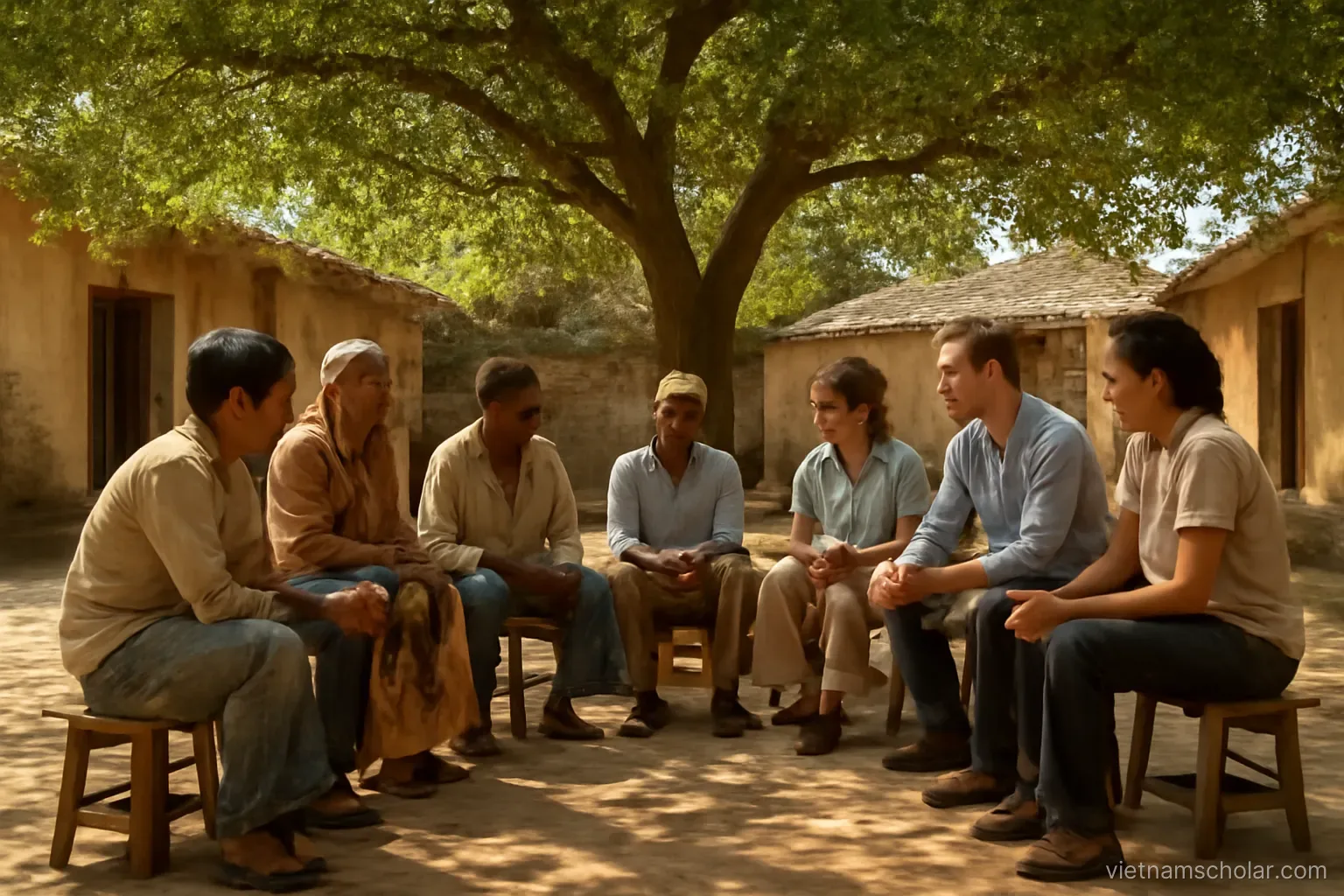
Individual informed consent is necessary and, in many settings, not sufficient.
Where research touches a whole community — its land, its health, its reputation — collecting signatures one by one without collective agreement can be procedurally correct and substantively wrong.
Layers of agreement
- Formal approval from local authorities where required.
- Agreement from recognised community representatives.
- Individual informed consent from each participant.
- Ongoing consent, since people may withdraw at any point.
- Each layer is separate; none replaces another.
Doing engagement properly
- Start before the protocol is finalised, so input can change something.
- Explain what the research is for, not only what it measures.
- Be explicit about what participants will and will not receive.
- Say clearly what you cannot promise.
- Local partners lead this; they hold the relationships.
Being honest about benefit
- Do not imply clinical or economic benefit that will not arrive.
- Distinguish between what participants get and what the field gets.
- Where compensation is appropriate, set it so it is fair without being coercive.
- Overstating benefit is the most common ethical failure in field research.
Returning results
- Plan and budget for it at proposal stage.
- Use the local language and accessible formats.
- Return findings to communities before or alongside publication.
- Report honestly when the findings are unremarkable.
Getting it wrong
- Consent obtained under implicit pressure from an authority figure is not consent.
- Translation done informally by a family member is not adequate.
- Communities that were studied and never heard back do not participate again.
- The cost of that falls on the next researchers, usually local ones.
One thing worth remembering
Begin engagement before the protocol is fixed.
Consultation that cannot change anything is not consultation, and people recognise the difference immediately. It also wastes the one genuinely useful thing engagement produces: finding out, in advance, why your planned design will not work here.
Câu hỏi thường gặp
Why is individual consent sometimes insufficient?
Because where research touches a whole community — its land, health or reputation — collecting individual signatures without collective agreement can be procedurally correct and substantively wrong.
What are the layers of agreement?
Formal approval from local authorities where required, agreement from recognised community representatives, individual informed consent, and ongoing consent since people may withdraw.
How should engagement be done?
Start before the protocol is finalised so input can change something, explain what the research is for, be explicit about what participants receive, say what you cannot promise, and let local partners lead.
What is the most common ethical failure in field research?
Overstating benefit — implying clinical or economic benefit that will not arrive, and blurring what participants get with what the field gets.
Why must engagement start before the protocol is fixed?
Because consultation that cannot change anything is not consultation and people recognise the difference, and it wastes the chance to learn in advance why the design will not work there.